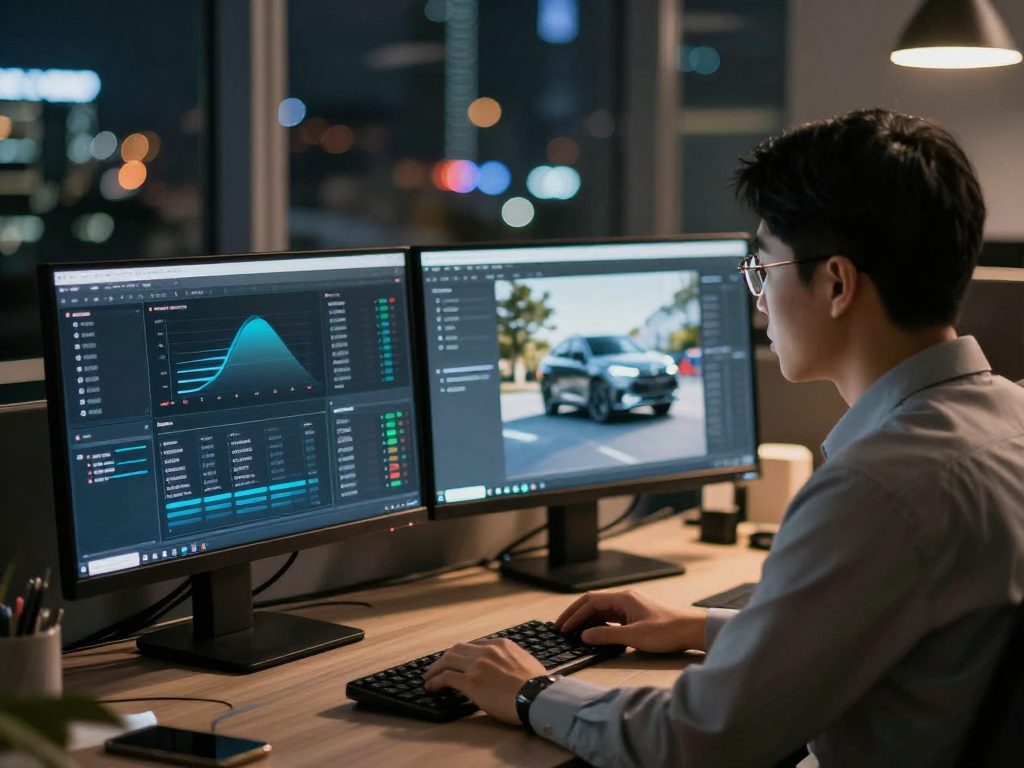
The market, in three numbers
Why buyers keep asking us about China — and why the way you buy matters more than ever.
Why buyers use a bridge
Most cross-border vehicle losses follow the same script: a nice photo, a stranger's chat window, and a car that never matches. A bridge is one accountable name, in one time zone, who physically checks what you're about to pay for — paint map, OBD data, battery report, driving video — before the balance moves.
And when rules change (they did, in 2026), the bridge absorbs that complexity: licences, deregistration, inspections, bookings, document sets.
How it works
One spec sheet in, one documented vehicle out. Four stages, each with its own deliverable.
01 · Spec → shortlist
You send model, year range, mileage ceiling, budget at your port, destination, quantity. Real candidates from live sourcing channels — availability answer in 48 hours.
02 · Ground inspection
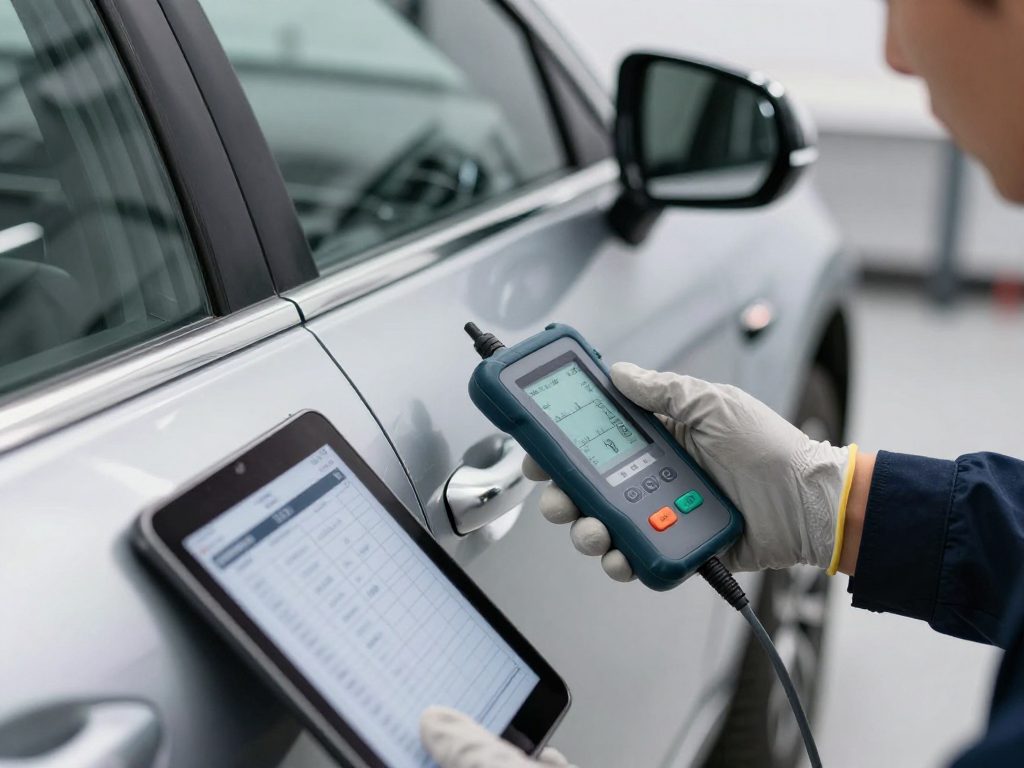
Body & paint-thickness map, OBD readout, mileage records; for NEVs a battery health and charge test. Full photo/video report per unit — this is what the balance is conditioned on.
03 · Licensed export
Our licence-holding export partner executes: licence, deregistration, official inspection where applicable, customs, Ro-ro or container booking. The complete document file travels with the vehicle.
04 · After arrival
Consumable-part kits for the models you import, repeat-order prioritisation, and one contact who remembers your whole history.
Two ways to move a car
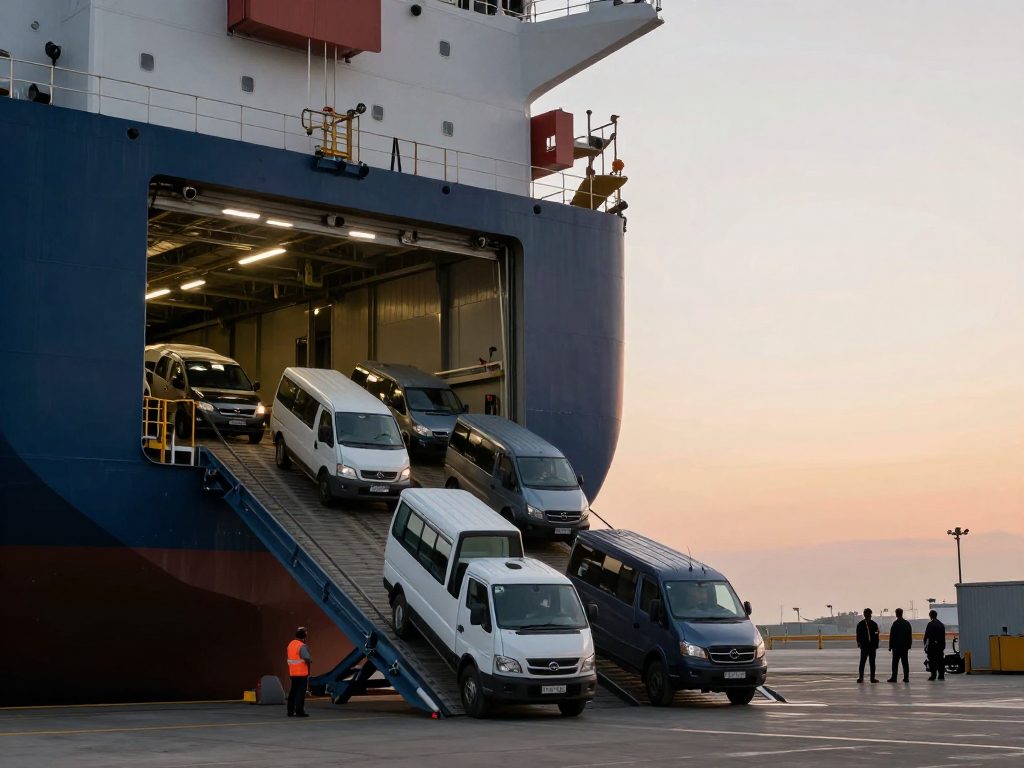
Ro-ro (roll-on/roll-off) — the car drives onto the vessel deck. Cheapest per unit, ideal for 3+ vehicles and standard specs; sailing schedules set your timeline.
Container (20'/40', 1–3 cars) — maximum protection for high-value EVs, parts bundled inside, or destinations with limited Ro-ro service. Central Asia? China-Europe rail is on the menu too.
Who we serve
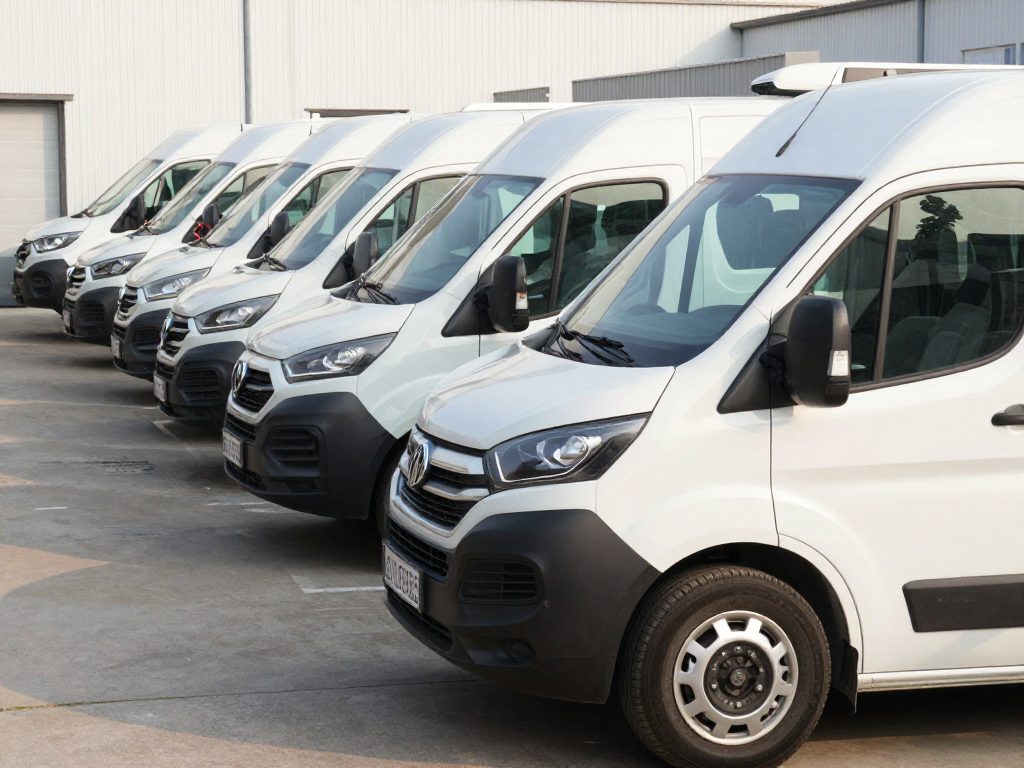
Independent dealers — mixed pilot loads (3+ units) to test your market without betting a container on one guess. Tiered pricing as volumes grow.
NEV-first markets — BEV/PHEV sourcing with battery-health certification as a standard report item; the Chinese used-EV wave is real, and so is the inspection discipline it needs.
Fleets & operators — vans and commercial units in matched specification, one file, one booking.
Importers in strict-document markets — GCC/EU-adjacent specs, age-limit screening, duty-base math quoted to your customs logic.
What's in your export file
| Commercial invoice & packing list | Itemised — vehicle, services, freight shown separately. |
|---|---|
| Export licence paperwork | Issued under our licence-holding export partner enterprise. |
| Vehicle deregistration title | Chinese registration cancelled for export; transferred to you. |
| Inspection report | Ground inspection photos/video + official export inspection where applicable. |
| Bill of lading | Carrier-issued; telex or original per your needs. |
| After-sales confirmation | Mandatory since 2026 for vehicles registered <180 days — we simply don't trade units that can't produce it. |

Costs, itemised
1 · Vehicle
Actual purchase price from the source dealer or auction, stated as-is.
2 · Ground logistics
Trailer or driver delivery from origin city to port/yard.
3 · Export operations
Licence, deregistration, inspection, customs — charged by the licensed partner, passed through.
4 · Freight
Ro-ro, container or rail, booked on current sailing; your Incoterms decide who pays.
5 · Our service fee
Stated openly on the proforma. No silent vehicle markup.
Compliance, stated plainly
What we don't do
- No phantom inventoryWe publish no "stock". Every candidate is live-sourced and physically checked before it appears in your shortlist.
- No zero-km launderingRecent cars without manufacturer after-sales confirmation are not exported as used vehicles. Full stop.
- No un-inspected shipmentsNothing loads that hasn't passed a ground inspection photographed unit by unit.
- No single-person cash dealsPayment follows the proforma against a named legal entity, milestones documented.
FAQ
What's the minimum order?
A mixed pilot of 3+ units or a full container programme. Single high-value EVs are possible as sample units — ask.
LHD or RHD?
Cars from the Chinese domestic market are left-hand drive (fits Central Asia, the Gulf, West Africa, much of the Americas). True RHD export versions exist for some brands in limited supply — we confirm per enquiry rather than promise.
How long does one cycle take?
Typically a few weeks end to end — sourcing and inspection in days, sea freight by line schedule (varies widely by destination). Your quotation carries realistic dates, not marketing dates.
How do I trust a car I never saw?
You see it: paint map, OBD data, battery report, driving video, plate and VIN frames — before the balance moves. Third-party inspection (SGS-class) welcome at your cost.
Can you do NEV fleets specifically?
Yes — the fastest-growing request. Battery health certification per unit is standard in our report for any BEV/PHEV.
What about parts after arrival?
The same company runs the aftermarket parts line for Chinese-brand vehicles (filters, pads, body parts). Vehicle customers get first access.
Start with one spec sheet
Model, year, mileage limit, budget at your port, country, quantity. If the deal doesn't work on paper, we'll say so before anyone pays anything.
Email the deskReplies within two working days · Corporate mailbox being provisioned; this address reaches the same team.